

Focus On Nature

Life Principles **
Use Feedback Loops
Cultivate Cooperative Relationsships
Build From The Bottom Up
Core Ideas
We'll consider a few key ideas and review specfc examples of how natural systems work and how they be applied to a small busiiness. It is extremly improtant to note that the examples and summaries provided below are very basic outlines of natural systems. In the real world, the systems become much more complex, they interact with other systems, and there are always unanticipated events that impact all systems. You can read more about the real-world complexity in the 'Example from Nature' section below.
FEEDBACK LOOPS
Understanding feedback loops can be very useful for your business. To get us started. here are a few examples:
1. Trophic Cascades & Top-Down Feedback
Removing or adding predators at the top of a food chain can cascade through lower levels. For example, eliminating a predator lets herbivores increase, which can overgraze plants, altering soil, water, etc. Conversely, restoring predators can reduce herbivore pressure, allowing vegetation to recover. This is a kind of top-down feedback which can have powerful impact as changes at one level often influence entire ecosystem structures.
2. Nutrient Cycles
Soil contains microbes, fungi, and bacteria that break down organic matter, releasing nutrients that plants need. Plants grow using those nutrients, then when they die or drop leaves, that organic matter returns to soil, supporting microbes again. Also, soil carbon feedbacks influence broader climate systems: warming can increase soil respiration, releasing carbon that further warms the climate. Plant-soil feedbacks can be positive (enhancing plant growth) or negative (e.g. build-up of pathogens) depending on species, soil type, and other factors.
3. Plant-Pollinator Mutualism (Positive / Mutual Feedback)
Plants often produce nectar to attract pollinators who visit, spread pollen thereby helping plant reproduction. Healthy plant populations support more pollinators and more pollinators improve plant reproduction. Over time, traits on both sides can evolve in response to each other, enhancing the mutualism.
4. Predator-Prey Cycles (Negative Feedback Loop)
In ecosystems, populations of predators and their prey often oscillate: when prey is abundant, predator populations grow; then predation reduces prey numbers; when prey become scarce, predator numbers decline; then prey rebound again, and so on. This tends to stabilize both populations over time. These negative feedback loops illustrate how the growth of one population triggers mechanisms that dampen that growth (via reducing the prey), which in turn reduces the predators.
So how can these ideas be applied to practical business processes? Here are a few specifics:
- Thresholds: Implement thresholds (e.g. maximum waste, lowest quality, resource scarcity) that your business should ideally work within
- Monitoring and sensing: Implement reliable ways to detect where your business system is diverging from your expectations. Are the number of product defects rising or is the amount of waste increasing?
- Responsive mechanisms: Create built-in actions that kick in when thsoe thresholds are crossed.
- Amplification of positive while damping negatives: Encourage virtuous cycles, attenuate vicious ones.
NATURAL BUDGETIING
This is the idea that natural systems can, based on feedback loops and patterns, budget resources (via storage mechanisms and trade-offs) using cues and memory-like functions to project and prepare for future conditions.
One examples of this is trees that “budget” sugar production through photosynthesis. Excess sugars in the growing season are stored as starch, then drawn down in winter or drought. Another example is how predator populations grow only to the extent prey populations allow. Overconsumption leads to collapse forcing an automatic “budget limit" which resembles feedback-based inventory management.
ANTICIPATORY SYSTEMS
Nature has fascinating systems that have evolved to anticipate based on cues, patterns, and feedback loops. Below are some examples along with corresponding business strategies and practices
- Many plants “project” future conditions using day length, temperature, or rainfall cues.
Business parallel: Save surplus revenue from peak sales months to cover slow periods and use predictable seasonal patterns (holidays, back-to-school, summer travel) to project demand and align marketing campaigns.
- Salmon time their upstream migration based on environmental signals (temperature, flow rates), anticipating conditions optimal for reproduction.
Business parallel: Launch products or campaigns when market conditions are most favorable (not just when you’re ready).
- Seeds won’t germinate immediately after dispersal. Many project “future risk” by staying dormant until environmental signals suggest a viable season.
Business parallel: Hold back ideas, projects, or products until timing is right. Not every opportunity should be executed immediately.
In summary, here are some key takeaways to consider for your business:
- Budget like bees and trees: store up in high-revenue times, ration in lean ones.
- Forecast like plants and squirrels: use signals, data, and memory to anticipate demand.
- Operate like cacti and termites: efficiency + resilience keeps you alive in tough conditions.
- Learn like immune systems and seeds: past experiences inform future resilience, patience is strategic.
Example From Nature
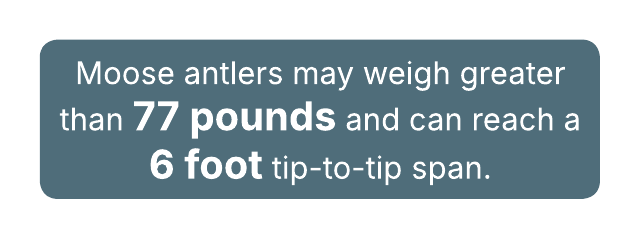
When we think about feedback loops, interacting systems, and the intricate complexity of natural processes, the Isle Royale Wolf–Moose Project stands out as one of the most compelling examples. This long-running ecological study—now spanning more than six decades—tracks how moose and wolf populations on Isle Royale National Park in Lake Superior rise and fall in relation to one another.
At first glance, it seems like a straightforward predator–prey cycle: more moose provide more food for wolves, so wolf numbers increase; as wolves prey on more moose, moose numbers decline, which eventually causes wolf numbers to fall as well. But the project has revealed that the reality is far more complex. Moose populations are shaped not only by wolf predation but also by factors such as food availability, severe winters, summer heat stress, disease, and parasites. Likewise, wolf survival depends not just on moose numbers but also on genetic diversity, inbreeding, accidents, and even chance events like ice bridges forming (or not forming) between Isle Royale and the mainland.
What makes the project so valuable is its ability to test assumptions about how ecosystems “should” behave. Instead of neat, predictable cycles, the data show a dynamic, multi-layered web of feedbacks and surprises. For example, crashes in wolf numbers have sometimes allowed moose to grow to record highs, only for food scarcity and harsh winters to trigger sudden population crashes. Conversely, when new wolves were reintroduced in recent years, their impact on moose was different than expected, reminding us that ecosystems are not static machines but evolving, living systems sensitive to unpredictable inputs.
In short, the Isle Royale Wolf–Moose Project not only teaches us about wolves and moose—it teaches us how complexity, resilience, and feedback loops shape all natural systems, offering lessons that extend far beyond the island. Read more about the study here: https://www.isleroyalewolf.org/the-study
Resource Link
Explore the many resources and publications - from deep research papers to dashborads and multimendia tools avaiable from the Forest Service Research & Development website. It can be found at this link: https://research.fs.usda.gov/
Nature Based Activity
Describe 2 different ways that your business can implement 'anticipatory systems' to strengthen your resilience?
1.
2.
Business Foundations
Core Ideas
Think of your business as an ecosystem where resources flow in cycles. Money, time, and materials may be spent today but renewed tomorrow through sales, relationships, or feedback. It is a good idea to forecast what you can, but expect (and prepare for) fluctuations. In this section, we'll look at 3 main ideas: Resources, Pricing, and Sales Channels. There are also great tools and tips for Forescasting in the 'Resources' section of this step. Taken together, these seperate but related concepts will provide a solid overview while still allowing for the ability to dive deep into the details when needed.
Pro Tip: It is also highly recommended to separate personal and business finances to avoid confusion and mitigate any risks to personal accounts due to business changes.
RESOURCE TYPES
The most common resources are below but of course, your specifc business may have variations:
• Money
• Time
• Materials
• Inventory
• Knowledge
• Grit
• Experience
• Feedback
• Relationships
PRICING STRATEGY
Below are some if the most common strategies for small business pricing. Typically, pricing should reflect true resource costs (not just financial, but also time, energy, relationship, and other types of capital). Be sure to incorporate your businesses mission values into financial accounting and reporting.
Cost-Plus Pricing: Adding a markup to production or service costs. Straightforward but can ignore market positioning.
Value-Based Pricing: Pricing based on perceived value to the customer rather than cost. Works well when differentiation is strong (e.g., eco-friendly, artisanal, premium service).
Competitive Pricing: Matching or undercutting competitors. Useful in crowded markets but risks eroding margins.
Dynamic Pricing: Adjusting prices based on demand, seasonality, or channel (common in hospitality or e-commerce).
Tiered or Bundled Pricing: Offering multiple packages or combining products/services to increase perceived value.
Freemium / Entry-Level Pricing: Often for digital products or services to capture leads and upsell later.
SALES CHANNELS
Here is a quick overview of the most common channels for sales. Thhink about how to choose channels that align with your businesses available resources (for example, social media may cost less money but more time; wholesale may cost more relationships and margin but bring volume). It is also improtant to consider factoring in the hidden costs of each channel like fees or learning curve for example. Finally remember that sales channels aren’t just distribution methods! They often shape customer expectations, brand visibility, and they defintly impact margins. A small business can use the same pricing across channels for simplicity, but consider adapting your strategies to each channel’s realities (like fees, competition, or perceived value). There are pros and cons to every approach to consider for your specifc business case.
1.Direct-to-Consumer (Website / Storefront)
Low overhead after setup, but marketing costs are significant.
Businesses often use value-based or bundled pricing here, since they control the brand story and customer relationship.
Example: An eco-friendly soap maker can charge premium prices on their own site because they can fully explain sustainability practices.
Marketplaces (Amazon, Etsy, Farmers’ Market, etc.)
High competition, platform fees, and customer comparison shopping.
Competitive pricing tends to dominate, sometimes combined with dynamic pricing to stay visible.
Challenge: Marketplace audiences may resist paying a premium unless you differentiate heavily.
Wholesale / B2B Sales
Requires lower per-unit prices due to bulk purchasing and distributor margins.
Cost-plus with volume discounts is common, but tiered pricing also works (different rates for different order sizes).
Here, pricing may be less flexible since retailers can dictate the ceiling, and you compete on reliability, quality, and branding.
Subscription Models (Recurring Delivery / SaaS)
Predictable, recurring revenue and loyalty.
Value-based and tiered pricing can be effective.
Example: A coffee roaster offers $20/month subscriptions for home delivery, with premium add-ons for single-origin beans.
Marketing Direction
Marketing is not just about interacting with customers. Take a holistic view and try to make every single interaction a positive opportunity for your business.
Suppliers, partners, mentors, and customers are not just external contacts - they are active resources in your ecosystem. Maintaining strong relationships can provide buffers in times of unpredictability and accelerators in times of opportunity. Consider different ways that you could prioritize building trust, reciprocity, and mutual benefit as part of your “budget.”
Remember: feedback is both a resource input (knowledge) and a resource multiplier (improves efficiency). When building systems to capture and analyze feedback try to include all interactions. Of course, customers and potential customers are the priority, but what feedback could you get from others? Could a distributer give insight on pricing or market conditions? Could an advisor provide context on the general economy? Feedback and information can help save money, time, and mistakes in the long run.
I.T. Security Recommendation
- Plan and complete regular asset inventories for information and physical resources.
- Categorizing those assets into categories such as public, private, confidential, and sensitive
- Assume and plan for a dynamic ecosystem and the need for periodic updates and improvements
- Expect your business partners and clients to also expect you to provide periodic updates to your information security posture, maturity level, and plans
- As mentioned previously, treat this activity as a valuable marketing and differentiation advantage.
Consider the value trust has for your clients. Would you benefit from establishiing a 'Trust' page? Here are some examples:
https://policy.hubspot.com/trust-safety
https://status.zenfolio.com
https://aws.amazon.com/trust-center/
https://monday.com/trustcenter
Resource Link
Financial Forecasting Worksheets from SCORE.org can be found below:
https://www.score.org/resource/template/financial-projections-template
https://www.score.org/resource/template/balance-sheet-template
https://www.score.org/resource/template/12-month-cash-flow-statement
https://www.score.org/resource/template/12-month-profit-and-loss-projection
FORECASTING
Forecasting is incredibly important and can help you recognize predictable patterns like seasonal demand, annual tax cycles, project phases and help you prepare for unpredictable fluctuations like supply chain issues, market shifts, and sudden growth opportunities. You may want to conceptualize forecasting in a few different scenario planning buckets like best case, worst case,and most likely case. FInally, don’t budget to the breaking point. It is good practice to leave buffers for the most critical resources like time, money, and cirtical supplies.
Business Foundations Activity
From the lists above, choose the Pricing Strategy and Sales Channel that best fits your business at this time.
Pricing Strategy:
Sales Channel: